
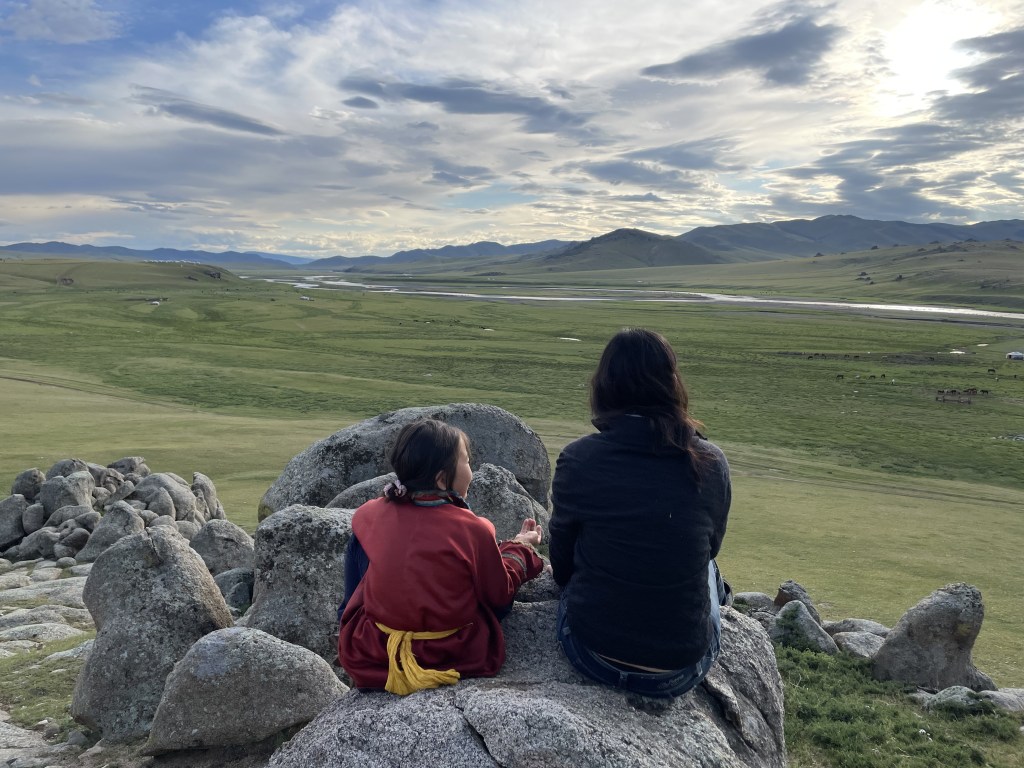
The grasslands might look quiet, but they are filled with lively and bustling sounds*. The grasshoppers, distant horse neighs, and the sound of flowing water have been so pure I haven’t been able to record in a long, long time.
The relationship between people and nature in the grasslands goes far beyond what my experiences can imagine. Without the confines of stables or fences, groups of horses wonder freely across the grasslands.
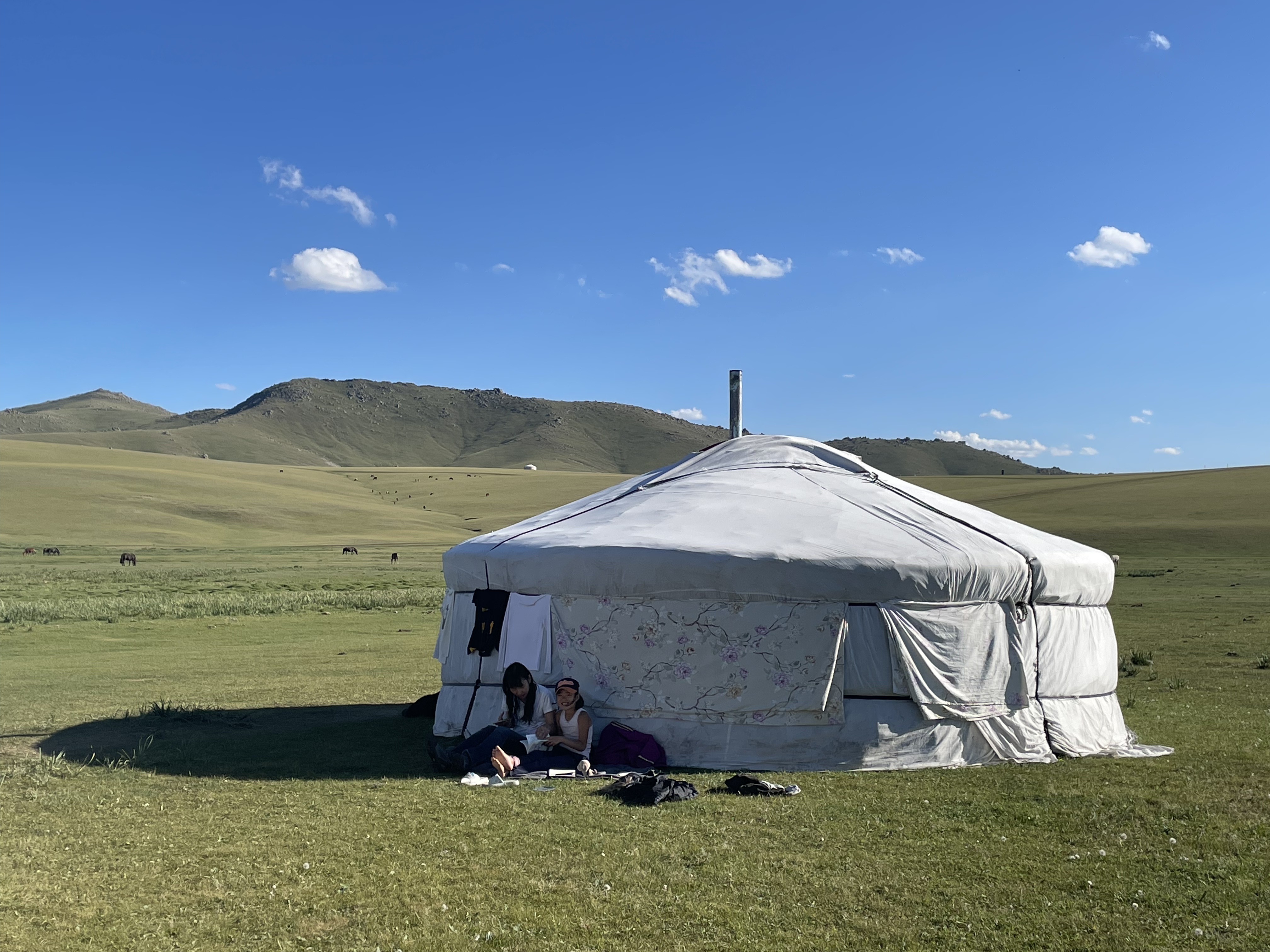
People are the same. Their yurts scattered across the grasslands. The 8 year-old girl was on the horse, between the yurts, in the river and at the mountain. We spent half of our time squeezing inside the nomads’ yurts and the other half camping on the grasslands. In these six days, I didn’t see any boundaries on this grassland. It was inspiring to see how humans and nature can coexist like this.
At the mountaintop Tibetan Buddhist temple, the monks’ chanting was the most beautiful music I’ve heard in years. The monks also reside in yurts, and the temple has a well that provides cool water for the monks and travelers.
蒙古無際的草原看似平靜,到處卻是吵鬧而有活力的聲音*。蝗蟲蚱蜢,和遠方的馬嘶及流水聲,我已經很久很久沒能錄到這樣乾淨的聲音了。
草原生活上人與自然的關係,遠超過我的經驗所能堆疊出的想像。沒有馬廄或柵欄的限制,這邊的馬就一群一群的遊蕩在草原上。
人也一樣,一顆一顆的蒙古包點綴在草原間,八歲的小女孩穿梭在馬上,在蒙古包邊,在河裡,在山上。我們一半的時間擠在遊牧人家的蒙古包,另一半騎馬露宿草原,這六天中,沒在這塊草原上看到一點邊際,原來人和自然真的有可能這樣共生。
山頂的藏傳佛教寺廟裡和尚的誦經,是我幾年來聽過最美的音樂。和尚也住在蒙古包,廟裡有一口井,提供給和尚及旅客清涼的水。
 An-Ting 安婷
Leave a comment